
Arc flash protection fabric is a specialized category of flame-resistant textile engineered to shield workers from the intense thermal energy, pressure waves, and molten metal splatter released during an electrical arc flash event. Unlike standard flame-retardant fabrics, arc flash fabrics are tested and rated to an Arc Thermal Performance Value (ATPV) — a specific caloric threshold expressed in cal/cm² — that directly maps to NFPA 70E Hazard Risk Categories. As of 2026, arc flash injuries remain among the most severe electrical workplace incidents globally, making the correct fabric specification a life-critical decision for safety managers, PPE buyers, and workwear manufacturers serving the electrical, utilities, and oil & gas sectors.
The Arc Flash Hazard: Why Ordinary FR Fabric Is Not Enough
Understanding the Arc Flash Threat
An arc flash releases energy measured in calories per square centimeter (cal/cm²). Even a relatively low-energy event at 4 cal/cm² can cause second-degree burns on unprotected skin within milliseconds. High-energy events can exceed 40 cal/cm², producing temperatures at the arc point that surpass 19,000°C — hotter than the surface of the sun.
Why Standard FR Fabrics Fall Short
Conventional flame-retardant fabrics — such as treated cotton workwear — are designed to self-extinguish after contact with an open flame. They carry no ATPV rating and provide no validated protection against the radiant and convective thermal energy of an arc blast. The key differences are:
| Property | Standard FR Fabric | Arc Flash Protection Fabric |
| Flame resistance | Self-extinguishing (SE) | Self-extinguishing (SE) |
| ATPV rating | Not rated | 12 – 45+ cal/cm² |
| EBT (breakopen threshold) | Not tested | >30 cal/cm² (typical) |
| Arc flash standard | None | ASTM F1506 / NFPA 70E |
| Pressure wave resistance | Minimal | Engineered construction |
Compared to general FR workwear, a purpose-built Arc Flash Protection Fabric with an ATPV of 25 cal/cm² can reduce burn injury risk by a factor of more than 6× in equivalent exposure scenarios — a difference that is often the difference between a survivable and a fatal incident.
What Arc Flash Protection Fabric Is Made Of: Key Materials
Primary Fiber Types
Arc flash protection fabric is constructed from inherently flame-resistant fibers or engineered blends. The three dominant material systems are:
1. Modacrylic Blends
Modacrylic fiber is the workhorse of mid-range arc flash fabrics. It is inherently flame-resistant — the FR property cannot wash out — and is typically blended with cotton, viscose, or anti-static fibers to balance comfort, durability, and protection.
- Typical ATPV range: 12 – 25 cal/cm²
- Weight range: 220 – 280 GSM
- Soft hand-feel, dye-compatible, cost-effective for bulk workwear programs
2. Meta-Aramid (Nomex®-type)
Meta-aramid is the benchmark fiber for high-hazard electrical applications. It retains its structural integrity at temperatures up to 370°C and does not melt, drip, or ignite. Blends of 95% meta-aramid / 5% para-aramid are common.
- Typical ATPV range: 20 – 45+ cal/cm²
- Weight range: 260 – 360 GSM
- Used in utility lineworker garments, switchgear maintenance PPE, and arc flash suits
- Compliant with EN ISO 11612, ASTM F1506, and NFPA 70E
3. Cotton Blends (FR-treated)
FR-treated cotton blended with modacrylic or meta-aramid offers a more breathable option for lower arc flash categories (CAT 1–2).
- ATPV range: 8 – 20 cal/cm²
- Weight: 220 – 300 GSM
- Suitable for lighter-duty electrical maintenance tasks
Material Comparison at a Glance
| Fiber System | ATPV Range (cal/cm²) | Weight (GSM) | Inherent FR | Best For |
| Modacrylic/Cotton Blend | 12 – 25 | 220 – 280 | Yes | Everyday workwear, CAT 2 |
| Meta-Aramid (95/5) | 20 – 45+ | 260 – 360 | Yes | High-voltage, CAT 3–4 |
| FR-Treated Cotton Blend | 8 – 20 | 220 – 300 | No (treated) | Light-duty, CAT 1–2 |
Our Arc Flash Protection Fabric is available in all three material systems, with fabric weight spanning 220 GSM to 360 GSM and ATPV ratings from 12 cal/cm² up to 45+ cal/cm², configurable for your specific hazard category requirements.
How Arc Flash Fabric Is Rated: ATPV, EBT, and ELIM Explained
The Three Core Performance Metrics
Understanding arc flash fabric ratings is essential for correct PPE specification. Three values govern arc flash fabric performance:
ATPV — Arc Thermal Performance Value
The ATPV is the incident energy level (cal/cm²) at which there is a 50% probability that a worker wearing the fabric would receive a second-degree burn (the Stoll curve threshold). A fabric rated at ATPV 25 cal/cm² means that at 25 cal/cm² exposure, 50% of test samples prevented a second-degree burn injury.
EBT — Energy of Breakopen Threshold
The EBT is the incident energy at which the fabric breaks open, exposing the wearer to direct flame or molten material. For our arc flash fabrics, EBT exceeds 30 cal/cm² across mid-to-heavy constructions. A fabric's arc rating is the *lower* of its ATPV and EBT values.
ELIM — Arc Rating (Elimination)
ELIM is a newer metric defined under ASTM F2178 that identifies the energy level at which there is a 0% probability of a second-degree burn — a more conservative and increasingly preferred standard for critical electrical infrastructure work.
NFPA 70E Hazard/Risk Category (HRC) to ATPV Mapping
| NFPA 70E Category | Minimum Arc Rating Required | Typical Application |
| CAT 1 | 4 cal/cm² | Voltage testing, visual inspection |
| CAT 2 | 8 cal/cm² | Electrical panel work (<240V) |
| CAT 3 | 25 cal/cm² | Medium-voltage switchgear |
| CAT 4 | 40 cal/cm² | High-voltage transmission, arc flash suits |
Key point: NFPA 70E (2024 edition, current industry standard as of 2026) requires that the arc-rated garment's rating *meet or exceed* the calculated incident energy at the work boundary — never simply estimate or round down.
Testing Standards
- ASTM F1959 / F1959M — Standard test method for determining ATPV
- ASTM F1506 — Standard for arc-rated FR garments
- IEC 61482-1-1 / IEC 61482-2 — European arc flash testing (open arc and box test)
- EN ISO 11612 — Heat and flame protection for industrial workers
Arc Flash Fabric in Practice: Construction, Weight, and Comfort
Fabric Construction for Arc Flash Applications
Arc flash protection fabric is not simply a fiber choice — the weave or knit construction, fabric weight, and finishing treatments all affect the final ATPV. We produce arc flash fabrics in the following constructions:
- Twill weave (2/1 or 3/1): Dense interlacing increases thermal barrier performance; most common for CAT 2–4 workwear
- Ripstop weave: Adds mechanical tear resistance for field environments without significant weight penalty
- Interlock knit: Used in arc flash underlayers and comfort base layers; lower ATPV but high flexibility
Weight vs. Protection Trade-off
| Fabric Weight (GSM) | Typical ATPV | Garment Application | Wearability |
| 220 – 240 GSM | 12 – 16 cal/cm² | Lightweight arc shirts, CAT 2 | High (warm climates) |
| 260 – 300 GSM | 20 – 28 cal/cm² | Arc coveralls, FR trousers | Moderate |
| 320 – 360 GSM | 30 – 45+ cal/cm² | Arc flash suits, CAT 3–4 | Lower (PPE ensemble) |
Anti-Static Integration
All arc flash environments are also high-static-risk environments. Our arc flash fabric constructions incorporate conductive yarn grids (typically carbon or stainless steel fiber at defined spacing intervals) to achieve a surface resistivity compliant with EN 1149-5 and ATEX/IECEx requirements. This is critical — a garment that protects against arc flash but generates electrostatic discharge creates a secondary ignition hazard.
Width and Roll Specifications
- Standard fabric width: 150 cm – 180 cm
- Roll length: configurable for cut-and-sew programs
- Available in rolls or folded formats for garment manufacturing supply chains
For workwear manufacturers supplying the Industrial Safety & Workwear Industry, we regularly supply arc flash fabric in bulk rolls to support seasonal production programs across North America, Europe, and the Middle East.
Selecting the Right Arc Flash Protection Fabric for Your Application
Step-by-Step Selection Framework
Selecting arc flash fabric requires aligning three variables: the calculated incident energy at the work location, the garment type, and the operational environment. Our technical team works through this framework with every wholesale and OEM buyer:
Step 1 — Determine the Incident Energy
Using an arc flash hazard analysis (per IEEE 1584-2018), identify the maximum incident energy in cal/cm² at each work task. This drives the minimum ATPV required.
Step 2 — Match the Hazard Category
Select fabric rated at or above the required ATPV:
- CAT 1–2 (4–8 cal/cm²): Modacrylic/cotton blend, 220–260 GSM
- CAT 2–3 (8–25 cal/cm²): Modacrylic or meta-aramid blend, 260–300 GSM
- CAT 3–4 (25–40+ cal/cm²): Meta-aramid construction, 320–360 GSM
Step 3 — Consider the Garment Type and Layering
Arc flash protection is additive across garment layers. A CAT 2 arc shirt (12 cal/cm²) worn over a CAT 1 base layer (4 cal/cm²) can achieve a combined system rating approaching CAT 3 — a common approach in utility workwear programs to reduce total garment weight without sacrificing protection level.
Step 4 — Evaluate Environmental Requirements
- Hot/humid climates: prioritize lighter-weight modacrylic blends with moisture management finishes
- Chemical splash environments: request oleophobic/hydrophobic finish (compatible with arc flash fabric; see also Oil & Gas Protective Fabric)
- Welding adjacency: consider dual-certified fabrics meeting both EN ISO 11611 (welding) and IEC 61482 (arc flash); see Welding Protective Fabric for single-hazard applications
Related Protective Fabric Solutions
For broader Workwear & Protective Clothing programs, arc flash fabric is often sourced alongside:
- FR Workwear Fabric — for general flame-resistant workwear without arc flash rating requirements
- Inherent Flame Retardant Fabric — for highest durability inherent FR in wash-intensive programs
- Cotton Flame Retardant Fabric — for natural-fiber FR solutions in lower-risk environments
These are available through our Flame Retardant Fabric collection, supporting bulk and OEM orders for export globally.
Frequently Asked Questions
What is arc flash protection fabric and how is it different from regular FR fabric?
Arc flash protection fabric is a flame-resistant textile that has been specifically tested and rated to an Arc Thermal Performance Value (ATPV), expressed in cal/cm². Standard FR fabric is designed only to self-extinguish after ignition — it carries no ATPV rating and provides no validated protection against the intense radiant and convective energy of an electrical arc flash event. Arc flash fabric is tested per ASTM F1959 and must meet the minimum ATPV required by NFPA 70E for the relevant Hazard/Risk Category (CAT 1 through CAT 4, requiring 4 to 40+ cal/cm²).
What ATPV rating do I need for my arc flash protection fabric?
The required ATPV is determined by an arc flash hazard analysis conducted per IEEE 1584-2018, which calculates the maximum incident energy in cal/cm² at each work location. NFPA 70E maps this to four categories: CAT 1 (minimum 4 cal/cm²), CAT 2 (8 cal/cm²), CAT 3 (25 cal/cm²), and CAT 4 (40 cal/cm²). The arc-rated garment or PPE ensemble must meet or exceed the calculated incident energy — never approximate or select a lower rating. Our arc flash fabrics are available from 12 cal/cm² up to 45+ cal/cm² depending on weight and fiber construction.
Is arc flash protection fabric inherently flame resistant, or does the FR property wash out?
It depends on the fiber system. Modacrylic and meta-aramid fibers are inherently flame-resistant — the FR property is built into the polymer chain and cannot wash out regardless of laundering cycles. FR-treated cotton blends rely on a chemical finish (such as a phosphorus-based treatment) that can degrade over time with repeated industrial laundering. For long-lifecycle garment programs or applications requiring 50+ industrial wash cycles, we recommend inherent FR constructions (modacrylic or meta-aramid) to guarantee consistent arc flash performance throughout the garment's service life.
Can arc flash protection fabric also provide anti-static protection?
Yes — and in most electrical environments, anti-static performance is a mandatory co-requirement. Our arc flash fabric constructions integrate conductive yarn (carbon fiber or stainless steel) at defined grid spacing to achieve EN 1149-5 and ATEX/IECEx anti-static compliance. This is particularly important in oil & gas and petrochemical facilities where electrostatic discharge is an ignition risk independent of arc flash. Specifying a fabric that meets both arc flash (IEC 61482 / ASTM F1506) and anti-static (EN 1149-5) standards from a single construction eliminates the complexity of layering separate PPE systems.
What is the minimum order quantity for arc flash protection fabric in bulk?
For bulk wholesale and OEM cut-and-sew programs, our standard minimum order quantity (MOQ) for arc flash protection fabric is 500 meters per color and construction. For custom fiber compositions, special widths outside the standard 150–180 cm range, or proprietary ATPV-rated constructions developed for private-label programs, MOQ requirements may be higher. Sample yardage for garment development and ATPV validation testing is available prior to full production commitment. Contact our technical sales team to confirm MOQ for your specific specification.
Related Resources
Related Products (4)
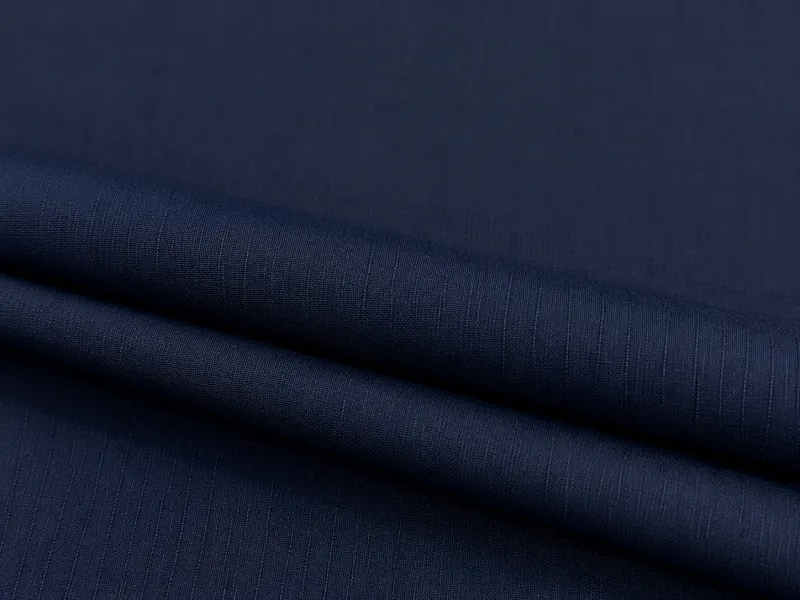
Arc Flash Protection Fabric
Advanced arc flash protective fabric for electrical safety clothing and utility uniforms.
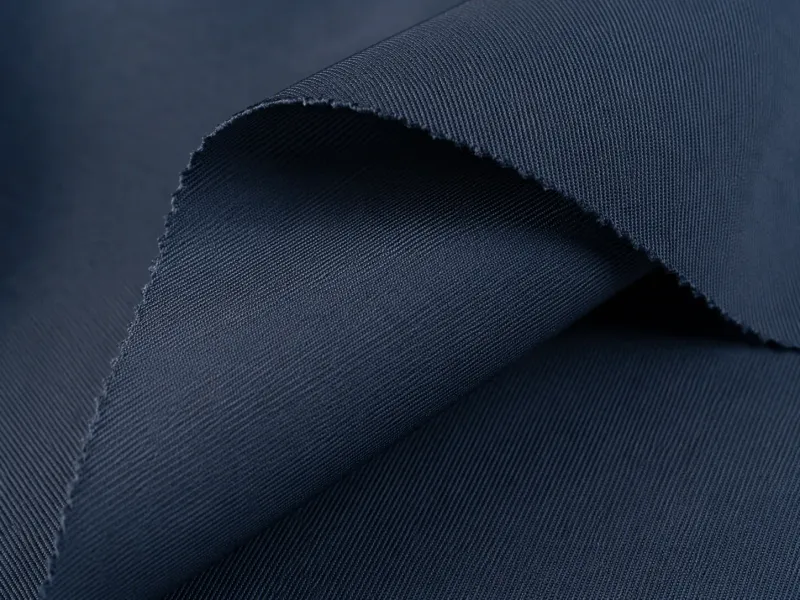
FR Workwear Fabric
Durable flame resistant fabric developed for industrial workwear and PPE applications.
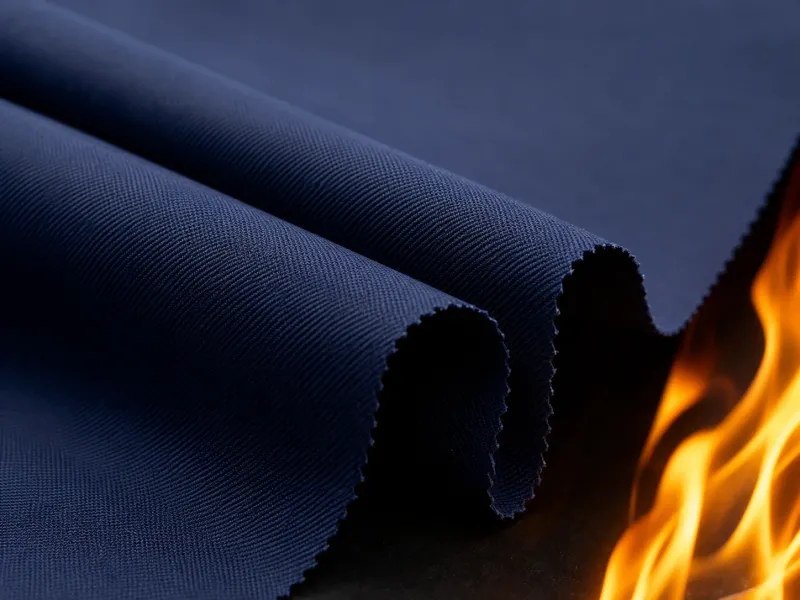
Inherent Flame Retardant Fabric
Permanent flame retardant fabric engineered with inherent FR fibers for industrial protective clothing.
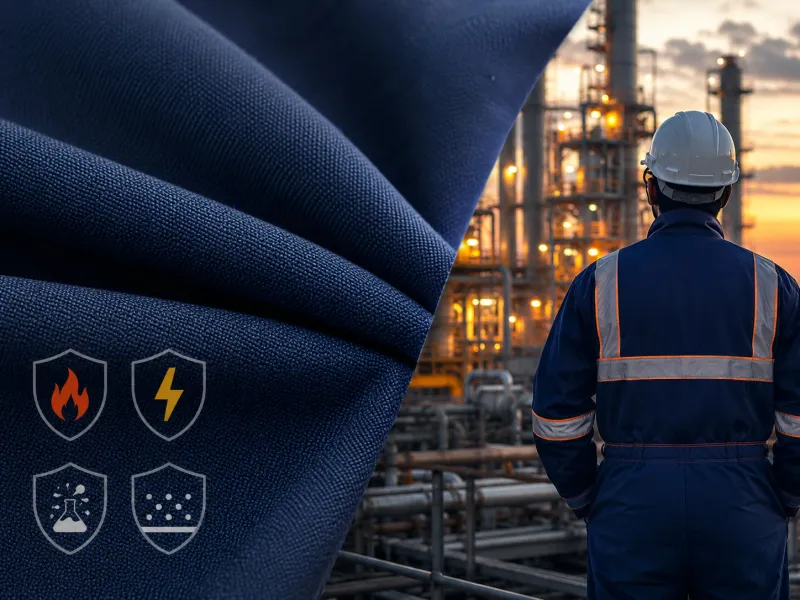
Oil & Gas Protective Fabric
Multi-hazard protective fabric developed for oil, gas and petrochemical industries.
Related Categories
Related Industries
Understanding the materials, ratings, and standards that keep electrical workers safe from arc flash hazards
Request Arc Flash Fabric Samples or a Bulk Quote