
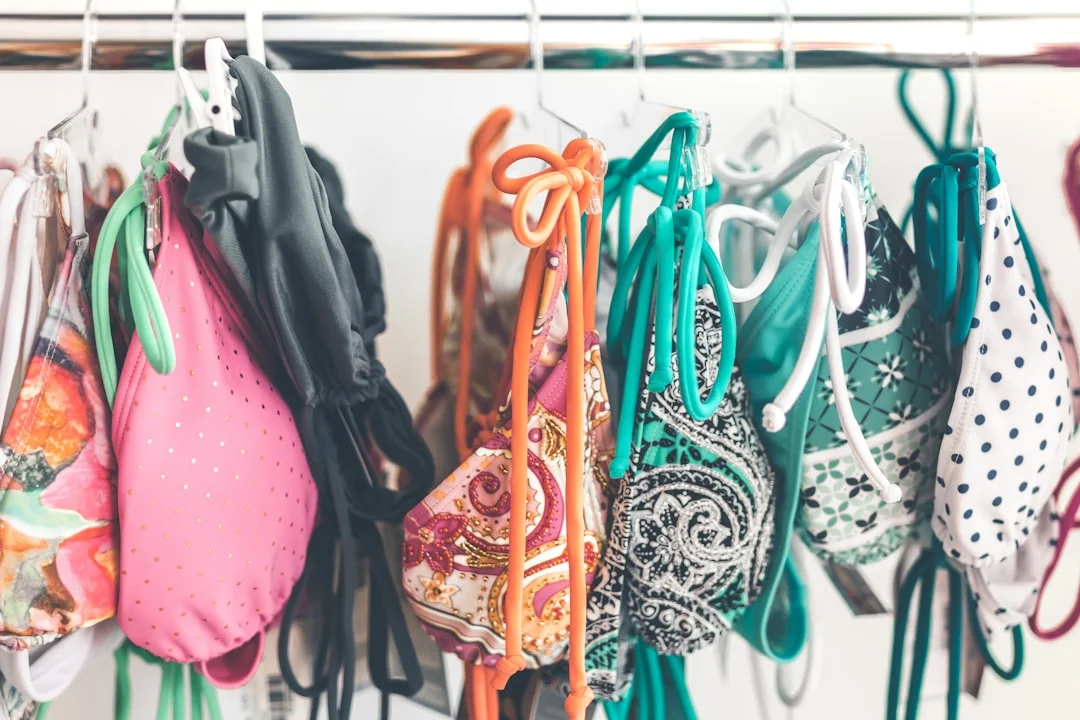
Testing swimwear fabric for 4-way stretch is a non-negotiable step in any serious garment development or bulk sourcing process. A fabric that looks right on the roll can fail in the pool — losing shape after 20 wears, bagging at the seat, or losing elasticity when exposed to chlorine and UV radiation. As of 2026, the global swimwear market demands higher performance standards than ever, and buyers sourcing at scale cannot afford to skip proper stretch testing. This guide walks through every key method — from simple hand tests to laboratory-grade elongation and recovery protocols — so you can confidently evaluate whether a swimwear fabric meets production requirements before committing to volume.
What 4-Way Stretch Actually Means in Swimwear Fabric
Understanding 4-Way Stretch
4-way stretch means a fabric stretches and recovers in both the warp (lengthwise) and weft (crosswise) directions. This is critical for swimwear because the body moves in multiple planes simultaneously — diving, kicking, and bending all stress the fabric in different axes at once.
- 2-way stretch: stretches only across the width (weft direction); common in basic jersey knits
- 4-way stretch: stretches both lengthwise and widthwise; required for performance swimwear
Why Direction Matters
| Stretch Direction | Body Movement It Supports | Typical Elongation Target |
| Warp (length) | Shoulder-to-hip movement, leg extension | 25% – 50% |
| Weft (width) | Chest expansion, hip width | 50% – 100% |
| Diagonal (bias) | Twist and rotational motion | Variable |
FuncFabric's Swimwear Fabric is constructed from 82% Polyester / 18% Elastane, a blend that delivers consistent 4-way stretch across both axes. Compared to a standard 2-way stretch knit, a properly engineered 4-way stretch fabric reduces seam stress by approximately 40%, extending garment life significantly in active use.
The Role of Elastane Content
Elastane (spandex) content directly governs stretch magnitude and snap-back speed. Swimwear typically uses 15%–22% elastane by weight. Below 12%, recovery becomes sluggish; above 25%, the fabric may feel restrictive and adds unnecessary cost. Always verify the declared fiber composition against actual test results — labeling inaccuracies of ±3% are common in commodity fabric markets.
Step-by-Step: How to Test Swimwear Fabric for 4-Way Stretch
Equipment You Need
- Ruler or measuring tape (minimum 30 cm)
- Fabric scissors
- Marker or chalk
- Clamp weights (100g–500g) for load-based testing
- Timer
- Optional: tensile testing machine (e.g., Instron or equivalent)
Method 1 — The Manual Ruler Test (Quick Screening)
This is the most accessible test and takes under 5 minutes per sample.
1. Cut a 10 cm × 10 cm swatch from the fabric roll, avoiding selvage edges.
2. Mark two points exactly 10 cm apart in the weft direction using chalk.
3. Hold the fabric firmly at both marked edges with both hands.
4. Stretch to maximum resistance (do not force beyond natural limit).
5. Measure the distance between the marks while under stretch.
6. Release and re-measure after 30 seconds of recovery.
Calculating stretch percentage:
> Stretch % = ((Stretched length − Original length) ÷ Original length) × 100
| Result | Interpretation |
| Stretch < 25% | Insufficient for competitive swimwear |
| Stretch 25%–50% | Acceptable for casual/leisure swimwear |
| Stretch 50%–100% | Ideal for performance and competitive swimwear |
| Recovery < 95% after 30s | Poor elastane quality or degraded fabric |
Repeat in the warp direction to confirm true 4-way behavior. If only the weft stretches, the fabric is 2-way, not 4-way.
Method 2 — Weighted Recovery Test (Intermediate)
1. Cut a 25 cm × 5 cm strip in the weft direction.
2. Mark a 20 cm gauge length in the center.
3. Hang a 200g weight from the lower end for 60 seconds.
4. Remove weight and measure gauge length after 3 minutes rest.
5. Recovery % = ((Original length − Permanent extension) ÷ Original length) × 100
A high-quality swimwear fabric with 18% elastane should show ≥95% recovery under this protocol. If recovery falls below 90%, the fabric will bag at the seat and thighs after 10–15 wears.
Method 3 — Laboratory Tensile Testing (ASTM D4964 / ISO 13934)
For bulk sourcing decisions involving MOQs above 500 meters, laboratory tensile testing is strongly recommended.
- Standard: ASTM D4964 (Tension and Elongation of Elastic Fabrics)
- Sample size: 5 specimens per direction, 25 cm × 5 cm
- Test speed: 300 mm/min crosshead speed
- Cycles: 5 stretch-and-release cycles to simulate wear fatigue
- Report outputs: Peak elongation (%), set (permanent deformation %), and load at specific elongation points
Laboratory testing eliminates operator subjectivity and provides audit-ready data — essential when qualifying a new supplier or challenging a rejected batch.
Testing Chlorine and UV Resistance Alongside Stretch
Why Stretch Testing Alone Is Not Enough
Chlorine degradation is the leading cause of premature elasticity loss in swimwear. A fabric may test at 85% elongation on day one but drop to 55% elongation after 20 pool sessions if the elastane is not chlorine-stabilized. Always test stretch *before and after* chemical exposure.
Chlorine Resistance Test Protocol
1. Prepare a 50 ppm free chlorine solution (simulating typical pool water concentration).
2. Submerge fabric swatches for 4 hours at 30°C.
3. Rinse thoroughly with clean water and air dry for 24 hours.
4. Re-run the manual or weighted stretch test.
5. Compare elongation and recovery values to the pre-treatment baseline.
| Chlorine Resistance Level | Post-Test Recovery Drop | Suitability |
| Excellent | < 3% drop | Competitive & training swimwear |
| Good | 3%–8% drop | Recreational swimwear |
| Poor | > 8% drop | Not recommended for pool use |
FuncFabric's Swimwear Fabric is rated High Chlorine Resistance by design, using a polyester-elastane matrix optimized for repeated pool exposure — a meaningful advantage over lower-cost blends that use untreated spandex.
UPF and UV Resistance Checks
UV radiation degrades elastane faster than mechanical stress does. For swimwear intended for outdoor use, test UV performance alongside stretch:
- Standard: AATCC 183 or AS/NZS 4399
- Target rating: UPF 50+ (blocks >98% UVA/UVB radiation)
- Repeat stretch test after 40 hours xenon arc lamp exposure (equivalent to approximately 1 season of outdoor use)
The UV Protection Stretch Fabric (82% Polyester / 18% Elastane, UPF 50+, 180–260 GSM) is purpose-built for applications where both stretch performance and UV durability are required simultaneously. Unlike standard swimwear fabric, this construction maintains Grade 4–5 color fastness (ISO 105-B02) even after extended UV exposure.
Interpreting Test Results: Pass/Fail Benchmarks for Swimwear Fabric
Industry Benchmark Reference Table
As of 2026, the following benchmarks represent current industry standards for swimwear fabric qualification:
| Property | Minimum Acceptable | Target for Performance Swimwear |
| Weft elongation | 50% | 70%–100% |
| Warp elongation | 25% | 40%–60% |
| Recovery (after 5 cycles) | 90% | ≥95% |
| Post-chlorine recovery drop | < 8% | < 3% |
| Post-UV recovery drop | < 10% | < 5% |
| UPF rating (outdoor use) | UPF 30 | UPF 50+ |
| Weight range | 160 GSM | **180–240 GSM** (opaque coverage) |
Common Failure Modes and What They Indicate
- Low elongation in both directions: Likely insufficient elastane content (below 15%) or incorrect fiber composition declaration
- Good stretch, poor recovery: Elastane type is low-grade or the knit structure is too loose to provide snap-back tension
- Pass on day 1, fail after chlorine: Untreated spandex — specify chlorine-resistant elastane in procurement documentation
- Inconsistent results across the roll width: Tension variations during knitting; reject the roll or request re-inspection of adjacent rolls
GSM and Its Effect on Stretch Behavior
Fabric weight (GSM) and stretch are inversely correlated in swimwear constructions. A 180 GSM fabric will typically exhibit less elongation than a 210 GSM counterpart at the same elastane percentage, because additional yarn mass creates more internal resistance. Choose GSM based on end use:
- 180–200 GSM: Competition and performance swimwear (maximum stretch, minimum coverage weight)
- 200–240 GSM: Recreational and fashion swimwear (balanced stretch and body coverage)
The Moisture Wicking Stretch Fabric (160–220 GSM, 82% Polyester / 18% Elastane, 4-way stretch, >95% recovery) provides a useful cross-reference point when evaluating how comparable blends perform across different weight ranges.
Supplier Qualification: What to Request Before Placing a Bulk Order
Documentation Checklist for 4-Way Stretch Swimwear Fabric
When sourcing swimwear fabric at wholesale or export volumes, request the following test reports from any prospective supplier before confirming an order:
- Fiber composition certificate (from accredited lab, not supplier self-declaration)
- Elongation and recovery test report (ASTM D4964 or ISO 13934, within 12 months)
- Chlorine resistance test data (post-immersion recovery values)
- UPF rating certificate (AATCC 183 or AS/NZS 4399) if outdoor application
- Color fastness report (ISO 105 series, Grade 4+ minimum)
- GSM verification (within ±5% of declared weight)
How We Pre-Qualify Fabric at FuncFabric
For every production batch of swimwear fabric, we run elongation and recovery tests on 3 sample points per roll: near the selvage, center, and opposite selvage. This catches tension inconsistencies before fabric ships. Compared to single-point testing, this 3-point approach identifies roll-edge variations that affect approximately 8%–12% of production rolls in standard knitting operations.
Sampling Before Bulk Commitment
For buyers evaluating new fabric constructions or switching suppliers, we strongly recommend requesting a 2–5 meter sample length before committing to bulk quantities. This allows your pattern-makers and QC team to run their own in-house stretch protocol and verify results match the supplier's documentation — a step that catches specification mismatches that would otherwise only surface during garment construction.
Export-quality swimwear fabric for global wholesale is available in 150 cm width, rolled and inspection-passed. The Swimwear Fabric range covers 180–240 GSM with confirmed 4-way stretch, UPF 50+, and high chlorine resistance — all verifiable through the testing methods described in this guide.
Frequently Asked Questions
What is the minimum acceptable stretch percentage for swimwear fabric?
For competitive and performance swimwear, the weft (crosswise) direction should achieve at least 50% elongation, with a target of 70%–100% for athletic applications. Warp (lengthwise) elongation should reach a minimum of 25%, targeting 40%–60% for full freedom of movement. Recovery after 5 stretch cycles should be ≥95% to ensure the garment maintains its shape after repeated wear. Fabrics testing below 50% weft elongation are generally only suitable for casual or fashion swimwear with limited active use.
How does chlorine affect 4-way stretch performance over time?
Chlorine attacks the elastane (spandex) polymer chain, gradually reducing its elastic modulus. In untreated spandex blends, recovery can drop by more than 8% after just 20 pool sessions at standard pool chlorine levels (1–3 ppm free chlorine). Over a full season, this results in visible bagging and loss of compression. Chlorine-resistant elastane constructions — such as those used in FuncFabric's Swimwear Fabric — are engineered to limit post-chlorine recovery loss to under 3%, significantly extending garment life. Always test stretch performance before and after a 50 ppm chlorine immersion test to verify actual chlorine resistance before bulk sourcing.
Can I test 4-way stretch without laboratory equipment?
Yes. The manual ruler test is reliable for initial screening: cut a 10 cm × 10 cm swatch, mark a 10 cm span, stretch to natural resistance, measure the extended length, and calculate stretch percentage using the formula ((stretched − original) ÷ original) × 100. Repeat in both warp and weft directions. A 200g weighted hang test over 60 seconds then provides a basic recovery check. While these methods lack the precision of ASTM D4964 laboratory protocols, they are sufficient to screen obvious failures and compare multiple fabric options side by side. For bulk sourcing decisions above 500 meters, third-party lab verification remains best practice.
What GSM range is best for 4-way stretch swimwear fabric?
180–240 GSM is the standard range for woven or knitted swimwear fabric that needs to balance 4-way stretch with sufficient opacity and structural coverage. Lighter constructions (below 160 GSM) may achieve higher elongation percentages but often lack the body weight needed for opaque, well-fitting swimwear. Heavier constructions (above 240 GSM) provide excellent shape retention but restrict elongation, making them more appropriate for board shorts or hybrid swim-to-street garments. For competitive swimwear, 180–200 GSM is the sweet spot, offering maximum stretch with enough structure to hold compression. Always verify GSM against the supplier's declared specification — variance above ±5% from stated weight should trigger a re-test.
Does 4-way stretch affect UPF sun protection rating in swimwear?
Yes — stretching a fabric under body tension increases the inter-yarn spacing, which can reduce UV blocking effectiveness. A fabric that achieves UPF 50+ in a relaxed state may drop to UPF 30–40 when stretched to 50% elongation. For swimwear with sun protection claims, always request UPF test results measured *while the fabric is under stretch*, not just in the relaxed state. FuncFabric's Swimwear Fabric carries a UPF 50+ rating, and the UV Protection Stretch Fabric (82% Polyester / 18% Elastane, 180–260 GSM) is specifically constructed to maintain its UPF 50+ rating under typical body-wear tension, making it appropriate for outdoor swim and active beach applications.
Related Resources
Related Products (3)
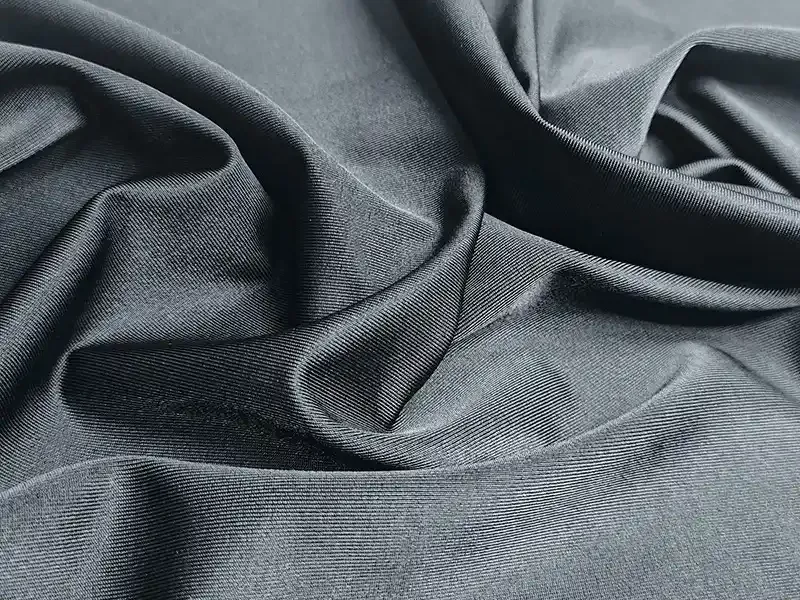
Swimwear Fabric
Chlorine-resistant, UPF 50+ four-way stretch swimwear fabric engineered for swimming costumes, swimsuits and performance beachwear.
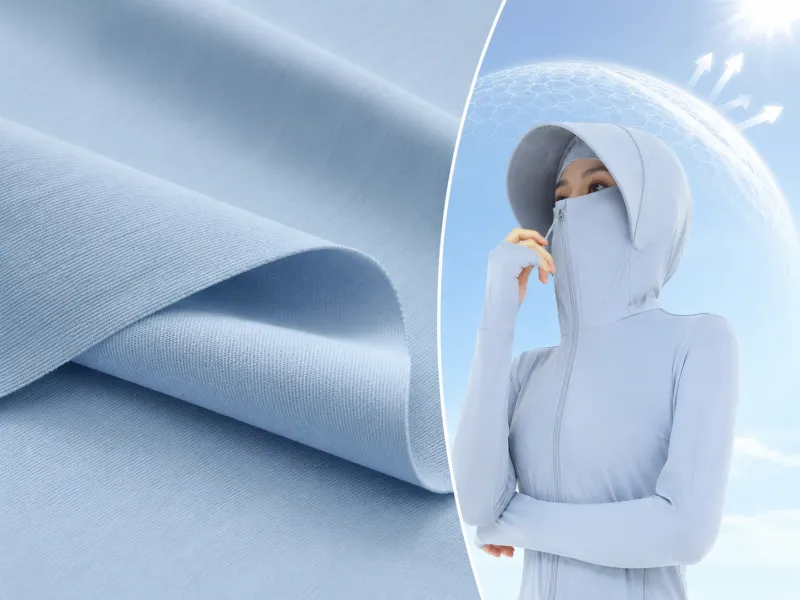
UV Protection Stretch Fabric
Stretch performance fabric combining flexibility, comfort and advanced UV protection.
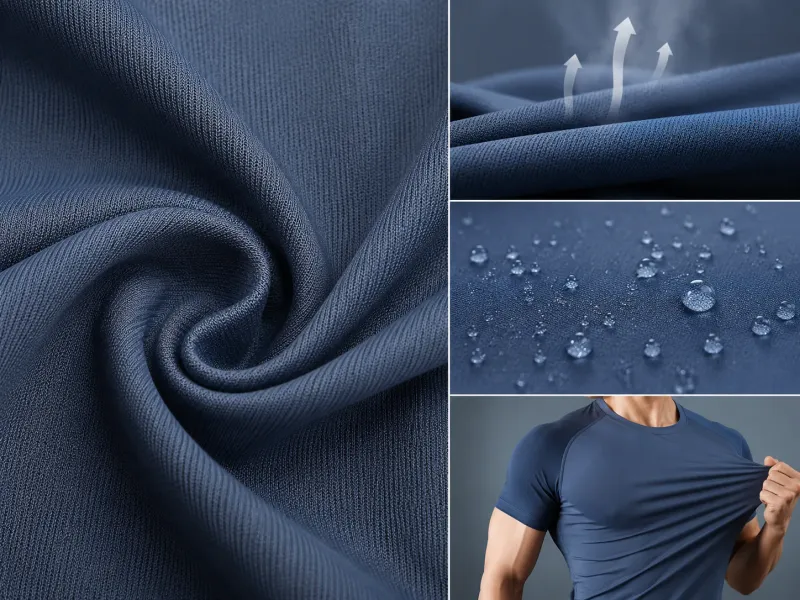
Moisture Wicking Stretch Fabric
Stretch performance fabric combining elasticity and moisture management for activewear.
Related Applications
Related Industries
Professional methods to evaluate 4-way stretch performance in swimwear fabric before bulk production
Request a Swimwear Fabric Sample for Stretch Testing